
Leaders often talk about being fit for growth, or having the capacity to deliver, but rarely do they link either one directly to culture. Although culture is recognised as being important, it tends to sit off to one side of the strategy conversation at best or is only vaguely connected to it.
When I describe culture as the capacity to deliver, adapt and grow, something shifts. Culture work gains the purpose, hard edge and tangibility that many leaders tell me has been missing from their earlier experiences.
I first came across this thinking when I joined the Adaptive Cultures Practitioner Program in 2018. I wanted to deepen my ability to help people and organisations respond to the adaptive challenges they face. I've learnt that to support others to build their adaptive capacity (the outer work), I need to keep building my own (the inner work).
This article introduces the Adaptive Cultures framework and some of the ways I’ve used it with organisations. My hope is that it helps you see culture less as something to blame, and more as an enabler of growth and part of the core work of leadership.
Strategy, capacity and culture
Strategy is about choices. It's how best to use finite resources to achieve desired outcomes. Once the strategy and targets are set, attention turns to execution. Are we fit for growth? Do we have the capacity to achieve our aspirations?
Capacity is what bridges the gap between what our strategy asks of us and our ability to deliver
There are many definitions of culture. One I find useful is how things really get done around here. It isn't academic, but I've found it easy for stakeholders to work with. I always expand it to ask why things are done this way, and to explore what might discourage alternatives. That brings in curiosity and diagnosis, which are essential for understanding human systems and for making culture work deliberate.
Thinking of culture as the capacity to deliver, adapt and grow gives it a clear purpose and a hard edge
Key insight. Linking strategy, capacity and culture has changed how well I can engage executive, operational, technical and commercial leaders in culture work. Capacity opens up the question of what enables and what inhibits growth, and why things get done the way they do.
A core role of any leadership team is to build the capacity of the team, and like strategy execution, it's a continuous process. There are three levers for building capacity, Individual, Social and Structural Evolution.
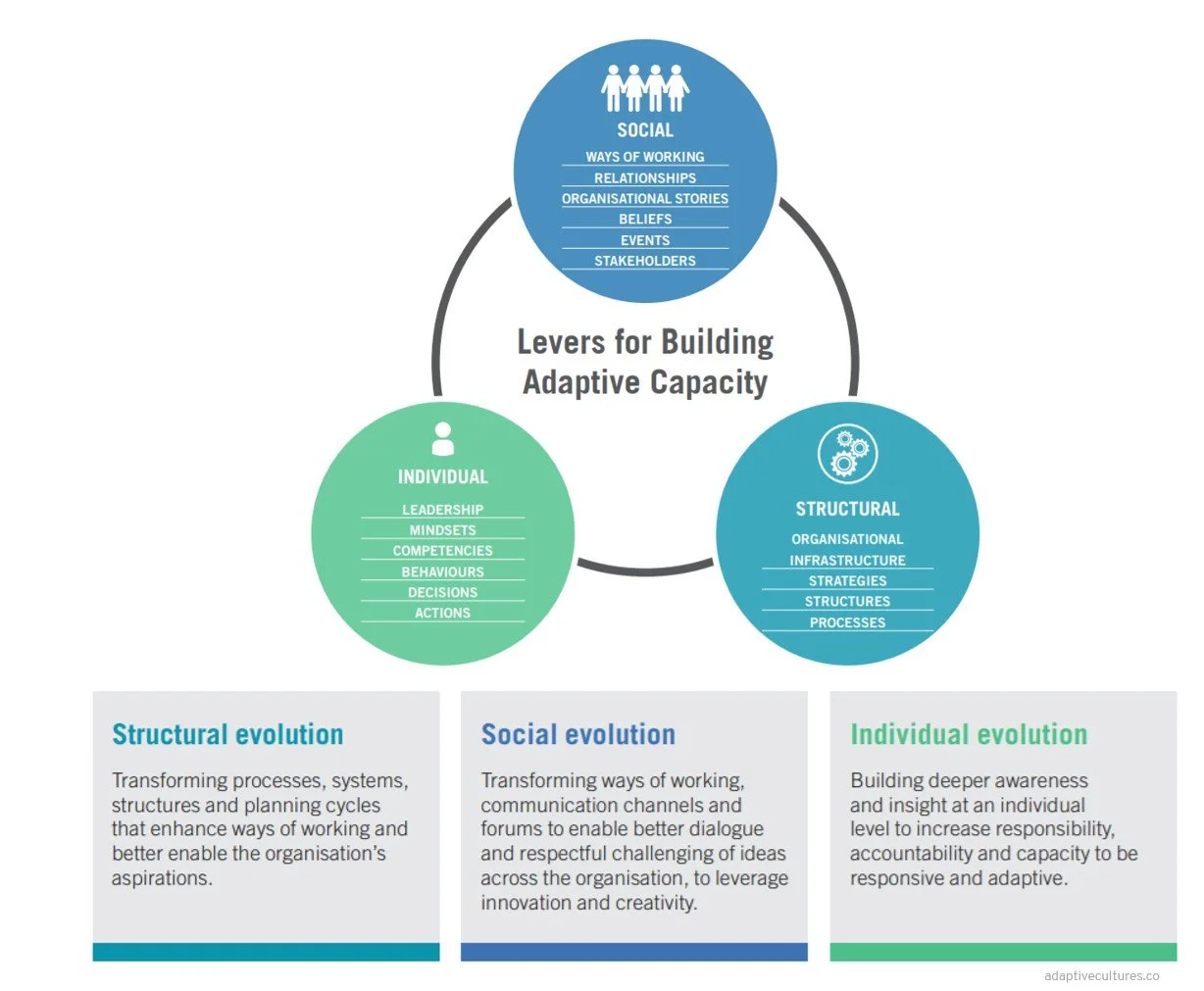
Culture Evolution Levers, adapted from adaptivecultures.co
Key insight. The language of capacity building is a simple and effective way to get leaders interested in culture work and owning it. In manufacturing, for example, leaders are keenly aware of production capacity and the levers they can pull to improve productivity. The same analogy works for culture, and it reinforces that the work is both deliberate and continuous.
Culture evolves
“Cultures are not static. They are living systems that evolve, sometimes devolve, and rarely stay the same. Ideally, culture enables an organisation's aspirations, strategy and purpose. When markets shift and aspirations change, culture has to evolve too. The more adaptive the culture, the better placed an organisation is to respond to disruption”, Adaptive Cultures
That's especially visible now. As AI becomes part of everyday work, many leaders are finding that the hardest challenges aren't technical. They're about how decisions get made, who feels safe to speak up, and how people see their own contribution. These are cultural questions, and they make the capacity question more urgent.
The Adaptive Cultures framework
The Adaptive Cultures framework helps leaders understand the journey of cultural evolution, which is also the journey of the organisation, from start up, to the present day and beyond. It isn't a ladder to climb or a score to improve.
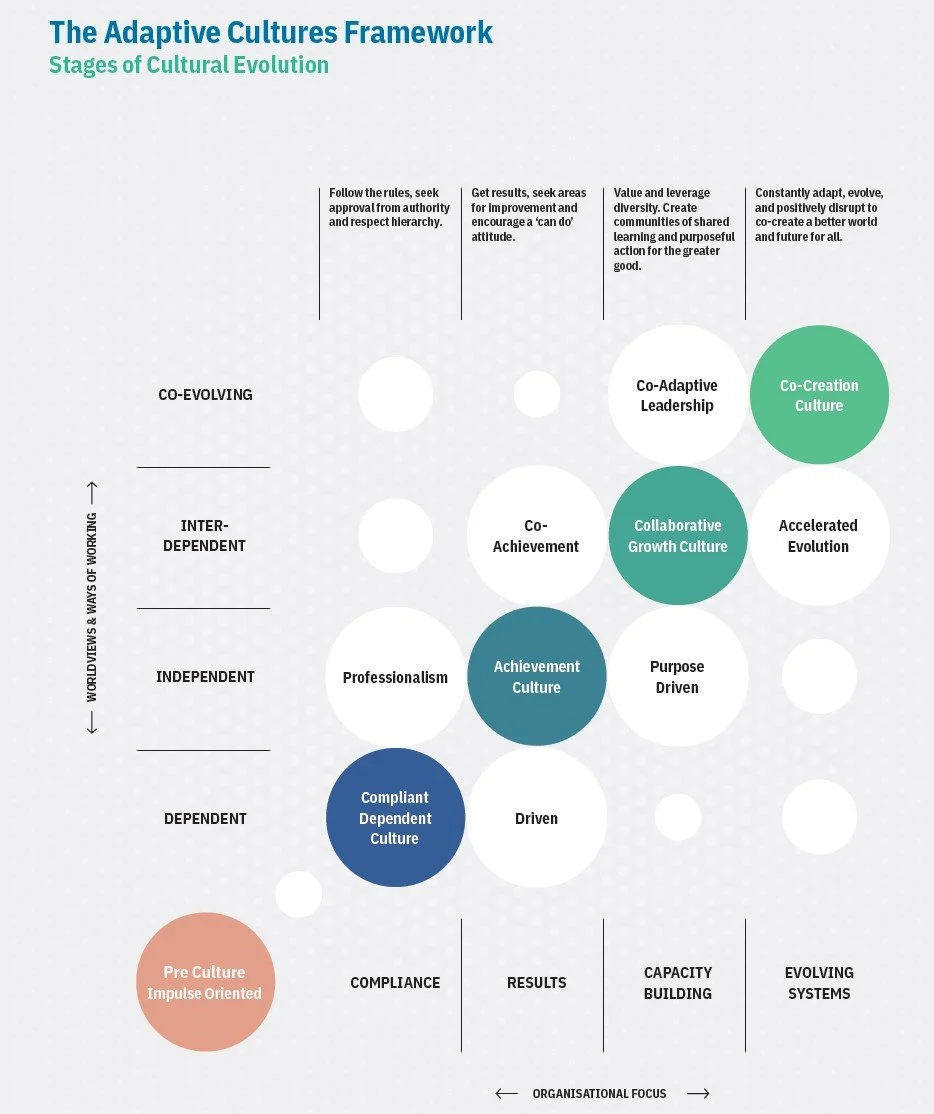
The Adaptive Cultures Framework, via adaptivecultures.co
I often use the framework in a facilitated walk-through on a large canvas, about two by three metres. It introduces leaders to the idea that as culture evolves, so do ways of working and organisational focus. We look at healthy and unhealthy aspects of each stage. We talk about what leadership looks like at each stage, what's safe and not safe to do, and what gets celebrated and rewarded. We also explore the frustrations, opportunities and growing pains that can signal it's time for the organisation to evolve. The purpose is to invite leaders to identify the aspirational culture, or capacity, they need to deliver their strategy.
Key insight. Giving leaders the power to define the aspirational culture strengthens their ownership of the work and their belief that it connects to strategy. It builds a common language and mental model, and it helps leaders make sense of the journey the organisation has been on and why things are done the way they are. It also gives frustrated voices a healthy place to be heard, which makes the desire to evolve clearer to the whole group.
Diagnosing Culture
To diagnose culture, we need to see the patterns across the system and how they support or limit evolution. The Adaptive Cultures Insights Diagnostic helps identify the current stage of cultural evolution, across categories and as an overall centre of gravity, as well as the aspirational culture required.
Adaptive capacity and stage of evolution are measured across six categories:
Accountability and ownership
Adaptability, learning and innovation
Communication and collaboration
Leadership and people
Organisational design, systems and processes
Purpose and community
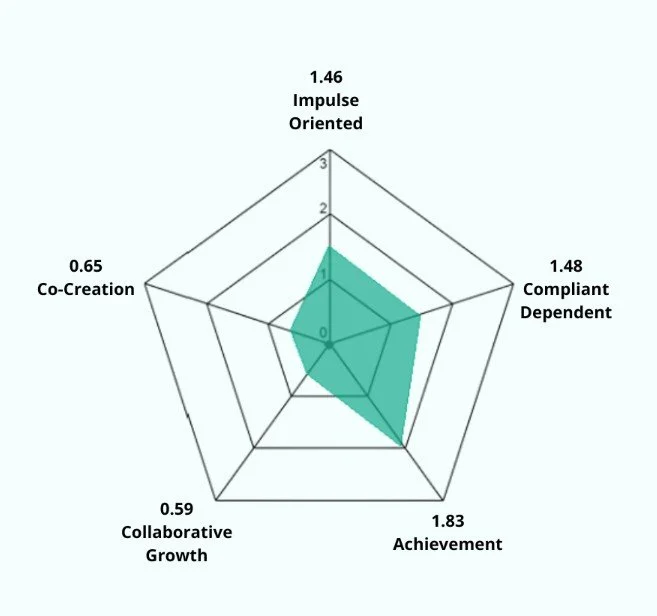
Adaptive Cultures Diagnostic sample, via adaptivecultures.co
The Adaptive Cultures Insights Cards offer a highly relational alternative to the full diagnostic tool. The cards can be used to guide conversations, invite curiosity and build shared awareness and commitment around cultural evolution. The 55 cards mirror the responses to the 11-question diagnostic.
The cards can be used in many ways, including to encourage dialogue around aspirational and current culture. The cards can also be used to explore different aspects of culture such as Risk, Customers, Leadership and Ambiguity. They can also be used in conjunction with the Adaptive Cultures Framework mat, bringing together the group’s collective perception of the aspirational and current culture.
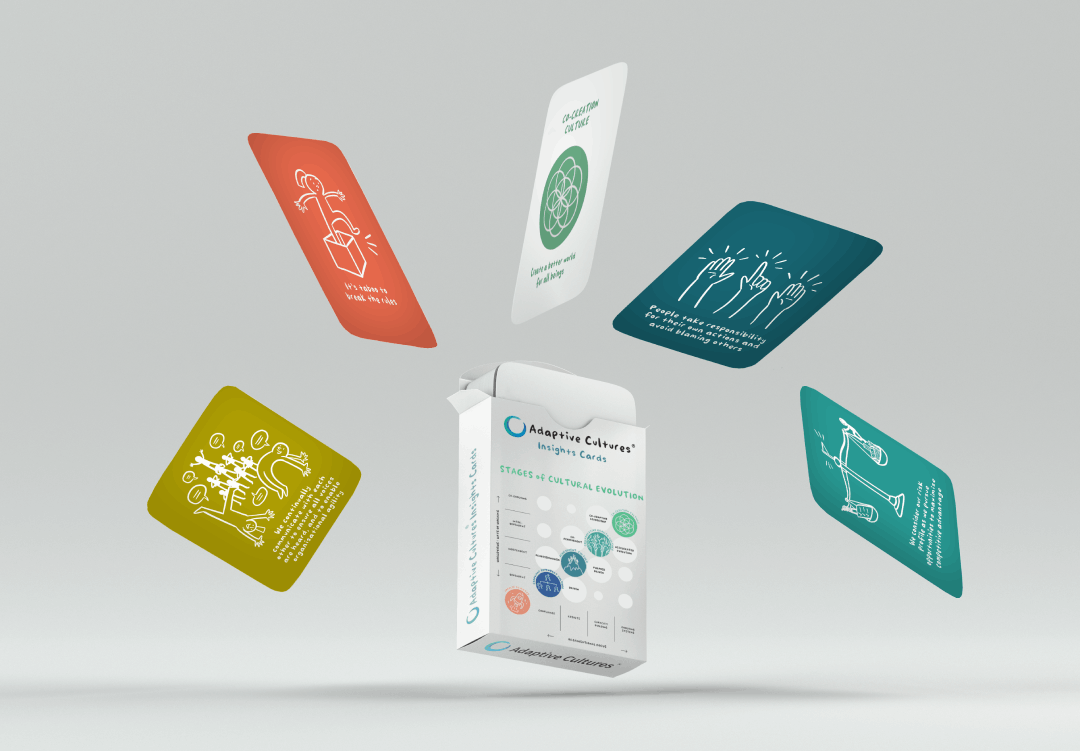
Insights Cards, via adaptivecultures.co
Key insight. The diagnostic gives leaders a powerful baseline and a shared understanding of where the organisation is now. It sets them up to make deliberate choices about why, how and where they focus their efforts to build capacity and evolve how things get done. The Insights cards offer an experiential and dialogue driven approach to diagnosing culture.
A pathway for building capacity
The Six Step approach provides a pathway for building capacity and evolving culture. Each step is part of a continuous process, and any step can be picked up at any point in an organisation's cultural journey.
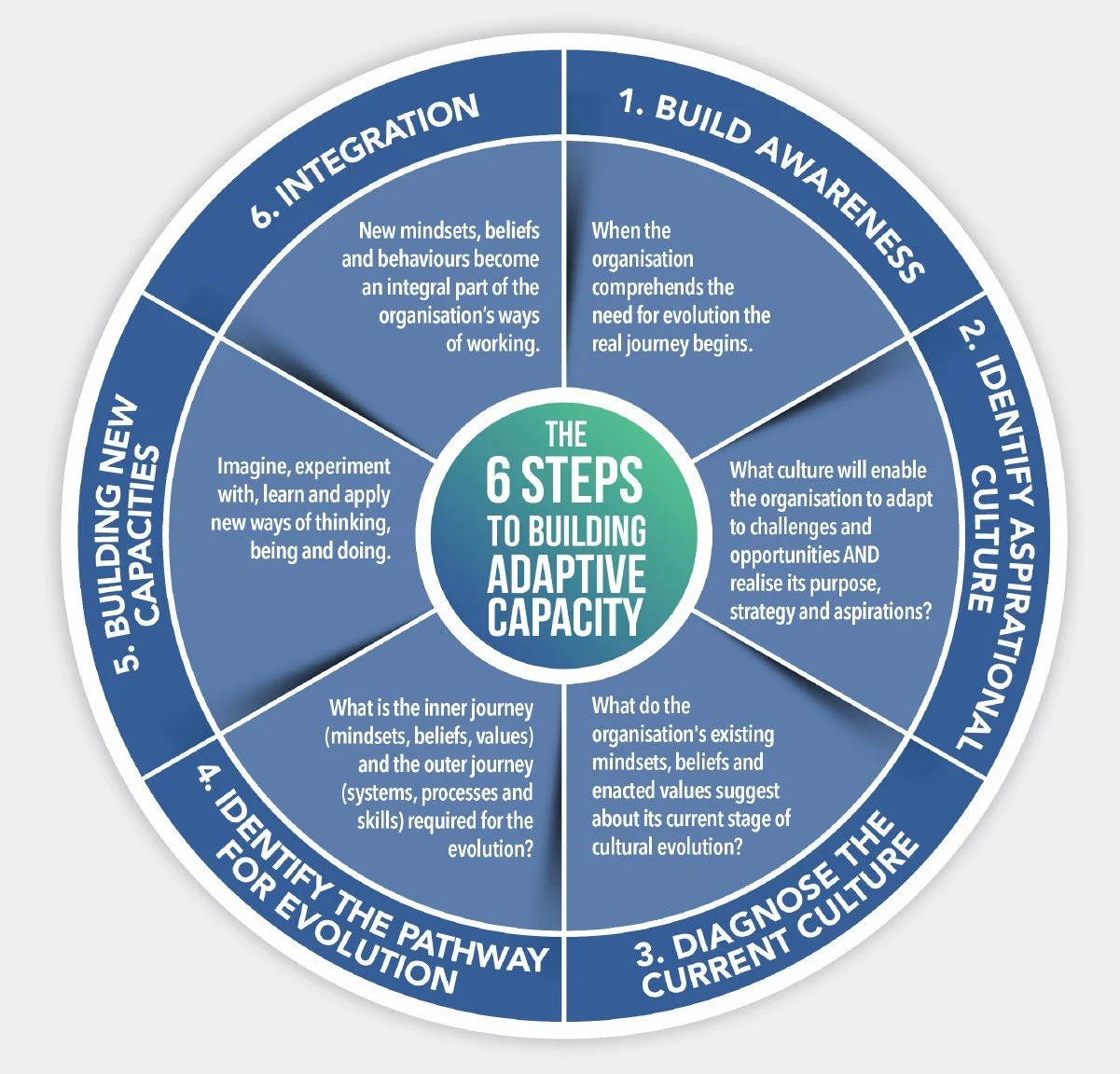
The Six Steps to Building Adaptive Capacity, via adaptivecultures.co
Key insight. The Six Steps align well with the strategic management cycle. Presenting the work as a rational problem-solving process is an easy way to bring leaders on board and to integrate capacity building within existing operating rhythms. Culture work stops being something extra or separate. It becomes the work of leadership. For People & Culture business partners, the same steps can shape strategically aligned Function/Divisional Capacity Plans.
A community of purpose
The Adaptive Cultures community connects me with culture practitioners around the world. None of us has all the answers, but the community lets us work out loud together, ask for help and support each other's work.
Key insight. The inner work of building capacity is challenging by its very nature. Culture work, and adaptive facilitation in particular, can also be lonely. The community has been a scaffold for me, and a source of real connection when I've doubted myself or wasn't sure how to proceed. It really is a community of purpose.
Where to from here
The Adaptive Cultures white paper is a great place to explore further. If you'd like to talk about what this could look like for your leadership team or organisation, I'd welcome a conversation.
Questions to reflect on in your organisation
Is there a shared definition of culture in your organisation? When people talk about culture, are they on the same page, or just nodding in agreement?
How is culture described, and what language is used to talk about it?
Is culture work linked to strategy, or is it separate? Is it owned by leaders, or seen as People & Culture’s remit?
Are culture diagnostics a core part of your measurement approach?
Is capacity building or cultural evolution a core capability of your leaders and of your Business Partnering teams (from across all functions)? How might you build the case for investing in it?
This article has been updated from a post I originally published on LinkedIn on 15 December 2020.